
What to Look for When Choosing Fabric for Furniture and Linen
Selecting fabric for your custom built bench seat or your new curtains sounds quite exciting, and don’t get me wrong, it is. However, I find a lot of my clients start getting confused on not only what colour or patten to choose, but whether or not the material will last for it’s intended purpose.
Not all fabrics are created equal when it comes to everyday living. Whether you’re selecting upholstery for a beautifully made sofa, or some new linen for your bedroom, it’s important to think beyond just how it looks.
Below I’ve shared some key things to consider next time you’re making these decisions.
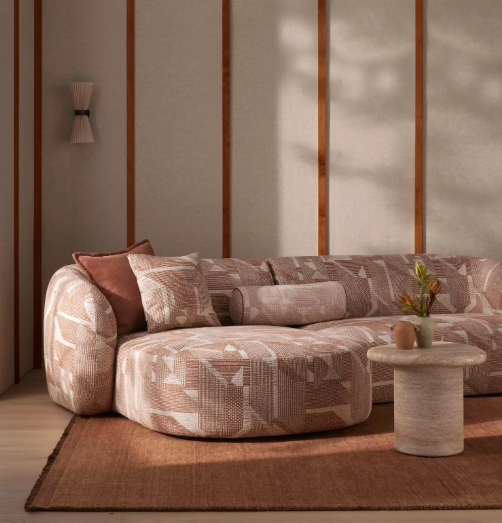
Braxton Peach- Warwick
Check the Martindale rating (durability)
One of the most important (and often overlooked) factors when choosing fabric is durability. This is measured via a Martindale rating, which essentially tests how well a fabric can withstand wear and tear. The higher the Martindale rating, the longer the fabric will last before pilling and earing.
For example, a fabric suitable for decorative use might sit around 10,000–15,000 cycles (rubs), whereas an everyday sofa should ideally be 30,000 cycles or higher. If you have kids or pets, I’d suggest looking into commercial grade materials where the Martindale rating is higher. These can range anywhere from 50,000-150,000 cycles.
Commercial grade materials can be fun! The above material from Warwick is classified as heavy commercial with a Martindale rating of 70,000 cycles.
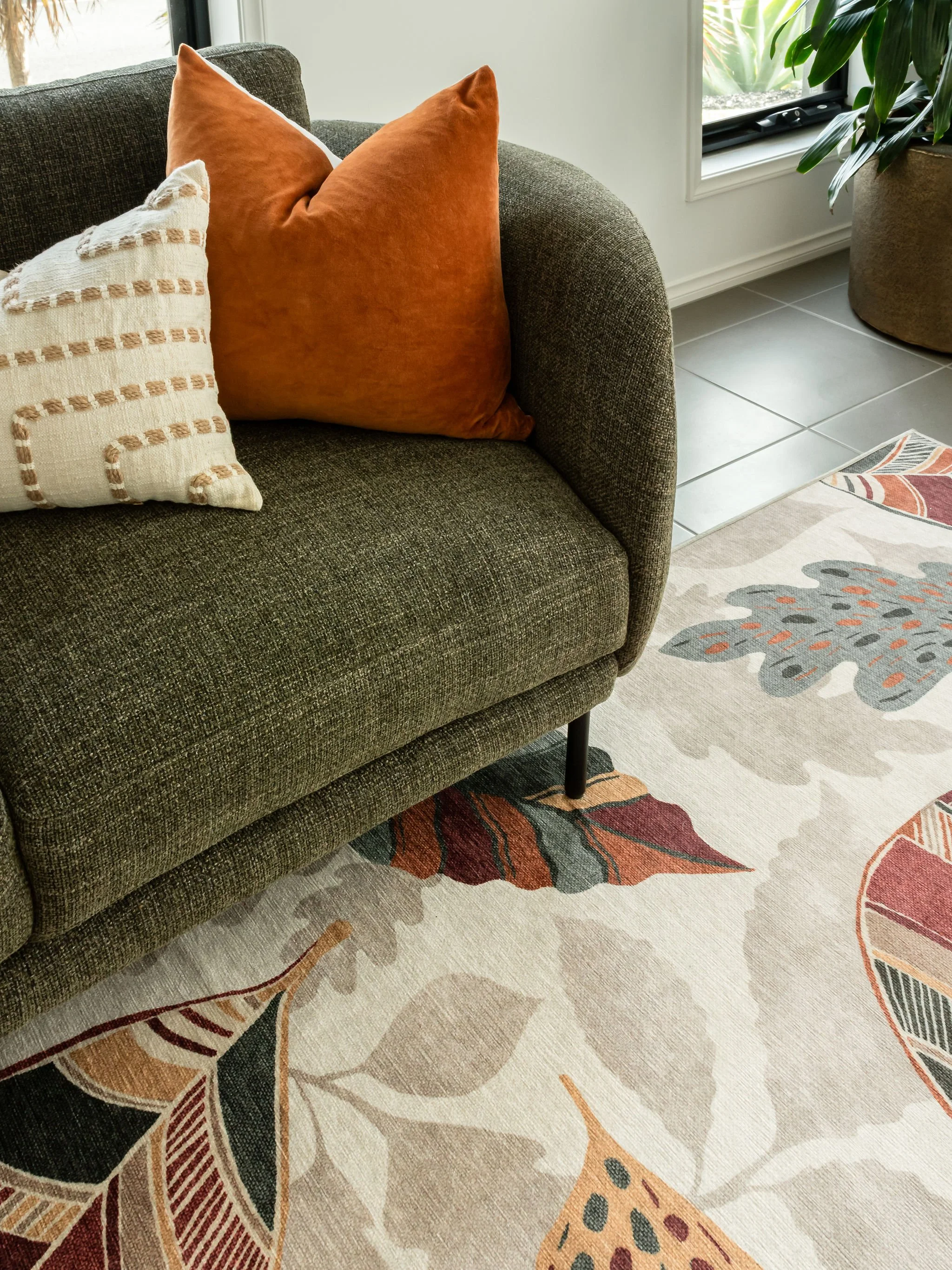
Project Curlewis- Designs by Chloe
Consider composition and longevity
Finding out what the fabric is made from plays a huge role in how it looks, feels and wears over time. Natural fibres like linen and cotton are breathable and relaxed, but they crease more and aren’t every one’s cup of tea. The last thing you want is to spend $2000 on linen dining chair slip covers, only for them to drive you mental because they’re always creased.
On the other hand, synthetic fibres such as polyester or acrylic are often more durable and resistant to fading and staining, however, they aren’t always great for those with allergies and can sometimes feel cheap if it’s a lower quality product.
Thankfully these days, you’ll find a lot of fabrics are a blend of both natural and synthetic materials, giving you the best of both worlds.
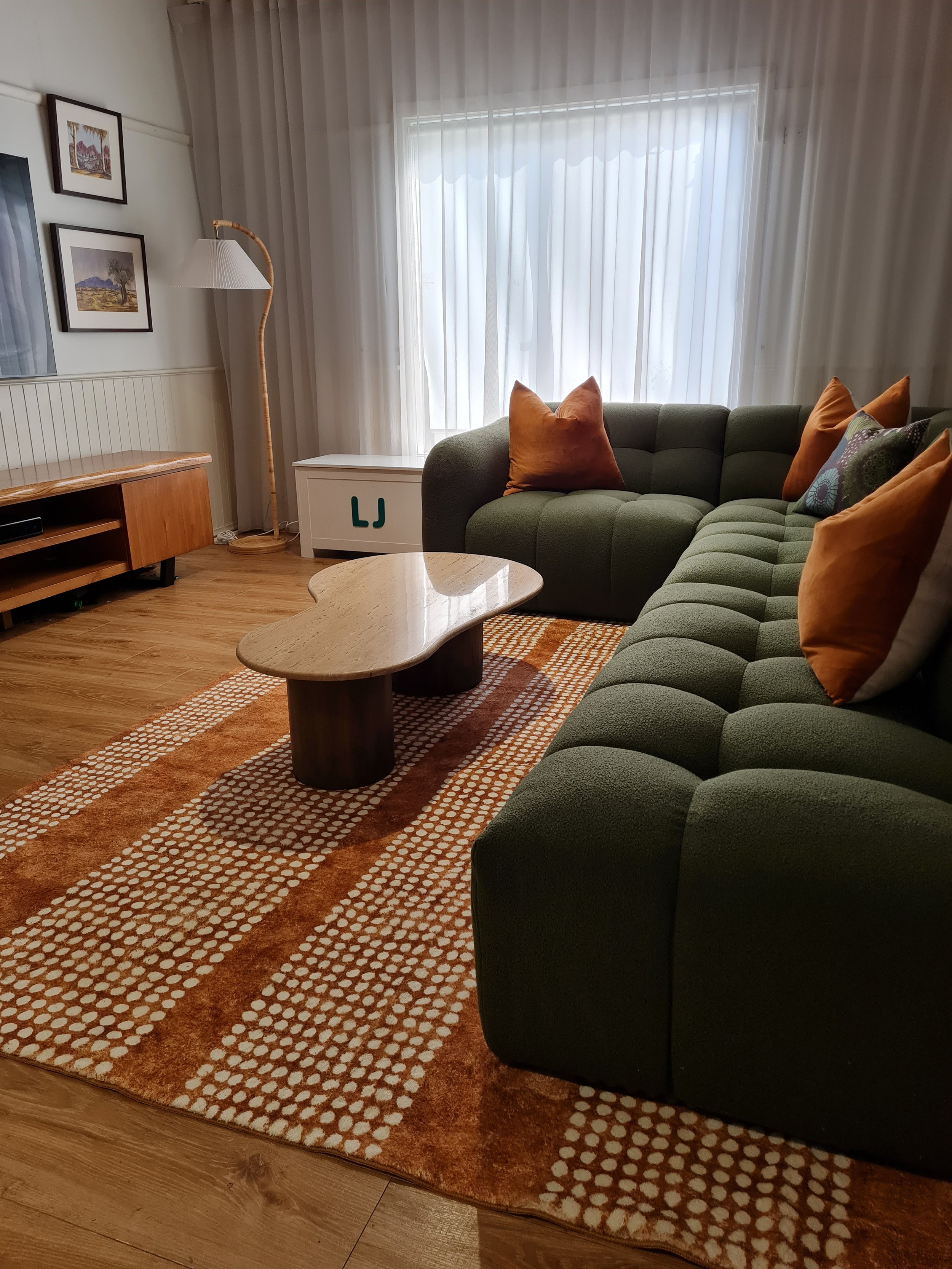
Project Reservoir- Designs by Chloe
Think about colour and pattern in your overall scheme
It’s easy to fall in love with a fabric on its own, but it’s important to consider how it will sit within your home as a whole.
If your space already has a lot going on, a more subtle fabric can help balance things out. On the flip side, a patterned fabric can add interest to an otherwise neutral room.
Colour is just as important. Lighter tones can feel fresh and airy but may show marks more easily, while darker tones are generally more forgiving. I personally prefer a lighter quilt on my bed at home, I just have to contend with little fingers leaving dirty marks from time to time haha
Whatever you’re selecting fabric for, think about who’s going to use it, how often and the colour scheme it’s going into. Where possible, take a sample home and try it in different lighting before fully committing.
Remember, it’s not just about how it looks in the showroom and more about how it lives with you over time.
Until next time!